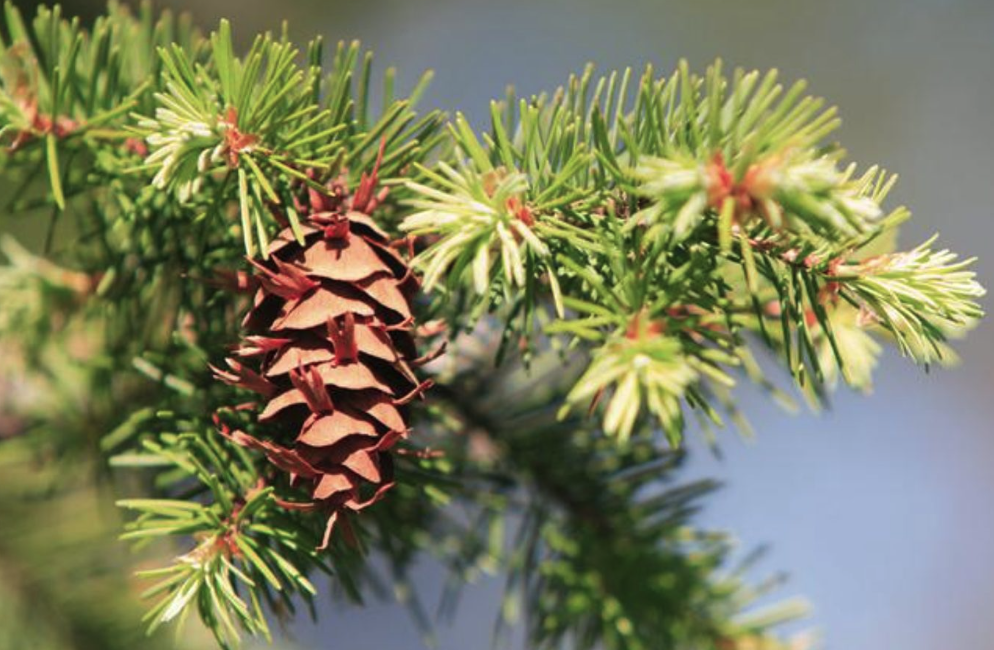
She weighs about an ounce and lives over a hundred feet high in a Douglas-fir, the second tallest tree in the world, second to coastal redwoods. The Sonoma tree vole’s only food source is Douglas-fir or Grand fir needles, depending on which old-growth tree she calls home, and she will munch about 2,500 needles a day.
She is active at night—clawing up, down, and across the tree branches covered with inch-long needles. Her semi-prehensile tail can’t grab the branches but helps her with balance and slipping. A male vole might visit several trees where redwood and Douglas-fir habitats overlap, but for the female, everything she needs is right here in this thousand-year-old tree. Besides being surrounded by food, she drinks water droplets from the needles. Family generations live nearby on different branches, building upon nests handed down by their ancestors.
She only eats a portion of each needle by chewing around the resin ducts. She might drop the remains, leaving wads of resin ducts on the ground. This is how scientists know she is living in the tree. She may decide to bring needles back to her nest (which is made of…needles) so that she can snack throughout the day.
She moves hurriedly throughout the night and avoids other nocturnal animals—Northern spotted owl, Humboldt marten, and Pacific fisher. Her species and those that depend on her are in danger from shrinking habitat, fragmented from logging, fire, and land conversion. Only five percent of the known nests are in protected areas like parks.
Her species is rarely photographed, living so high up in the trees. Scientists have gained little data on this elusive animal. That’s why we should protect the entire ecosystem, because even the organisms that we don’t understand, or aren’t aware of, have important roles in the universe.
Learn more:


Leave a Reply